The Invisible Terminal

The Invisible Terminal proposes a sensory-centered design framework for blind and low-vision travelers at Logan Airport Terminal B. Airports are designed for visual clarity, but for the 7 million Americans with visual impairments, that clarity becomes disorientation. Through field observation, sensory mapping, and user journey research, five spatial interventions were designed across Terminal B: Entry Threshold, Check-In Zone, TSA Screening, Departure Lounge, and Boarding Gate. Each intervention layers tactile floor guidance, Braille handrails, Bluetooth beacon audio cues, and acoustic contrast, creating an independent, dignified path through the terminal without reliance on sighted assistance.
Why this matters — the case for an inclusive terminal
01Why this matters — the case for an inclusive terminal
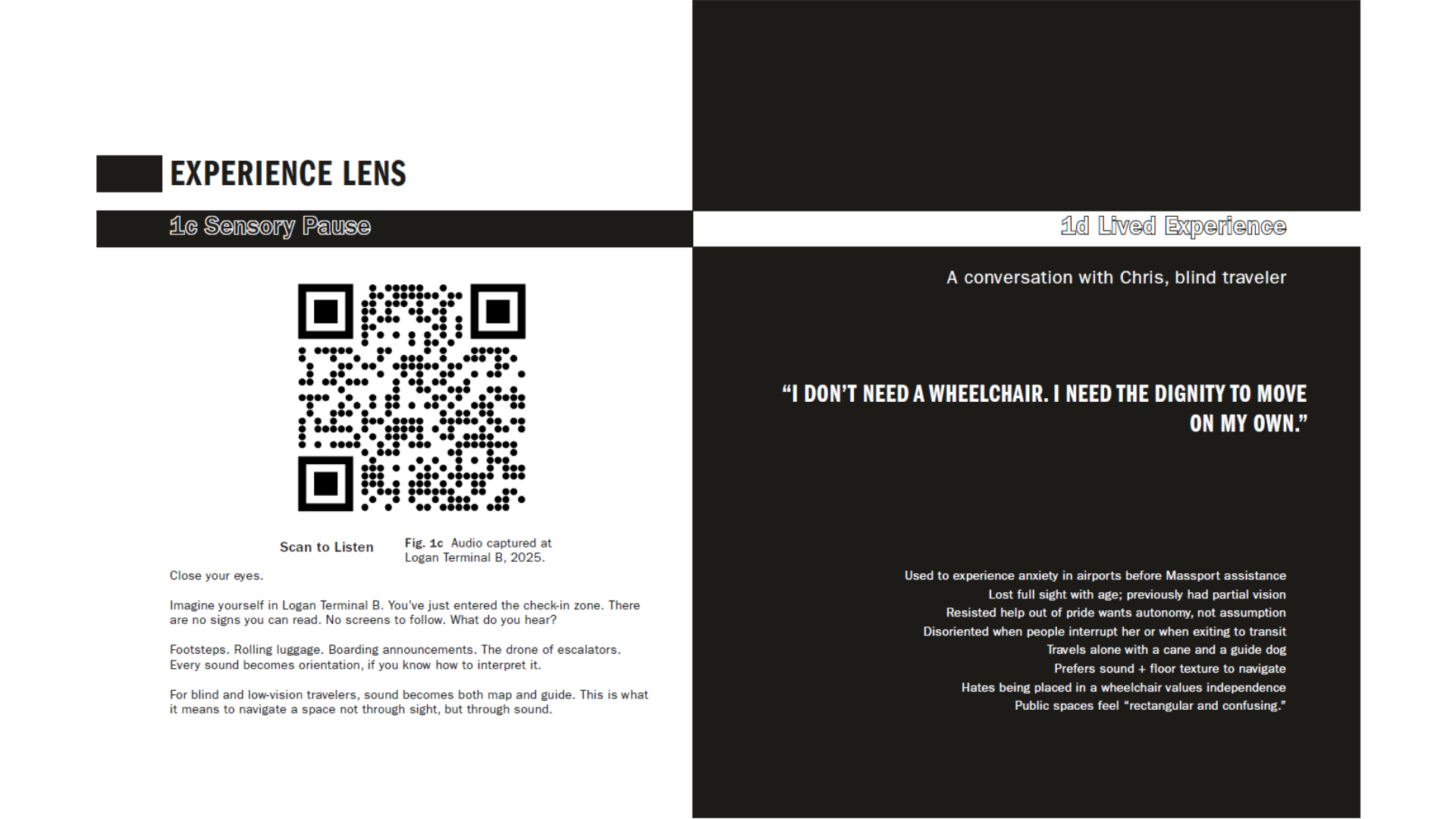
Experience Lens — sensory pause and a conversation with Chris, blind traveler
02Experience Lens — sensory pause and a conversation with Chris, blind traveler
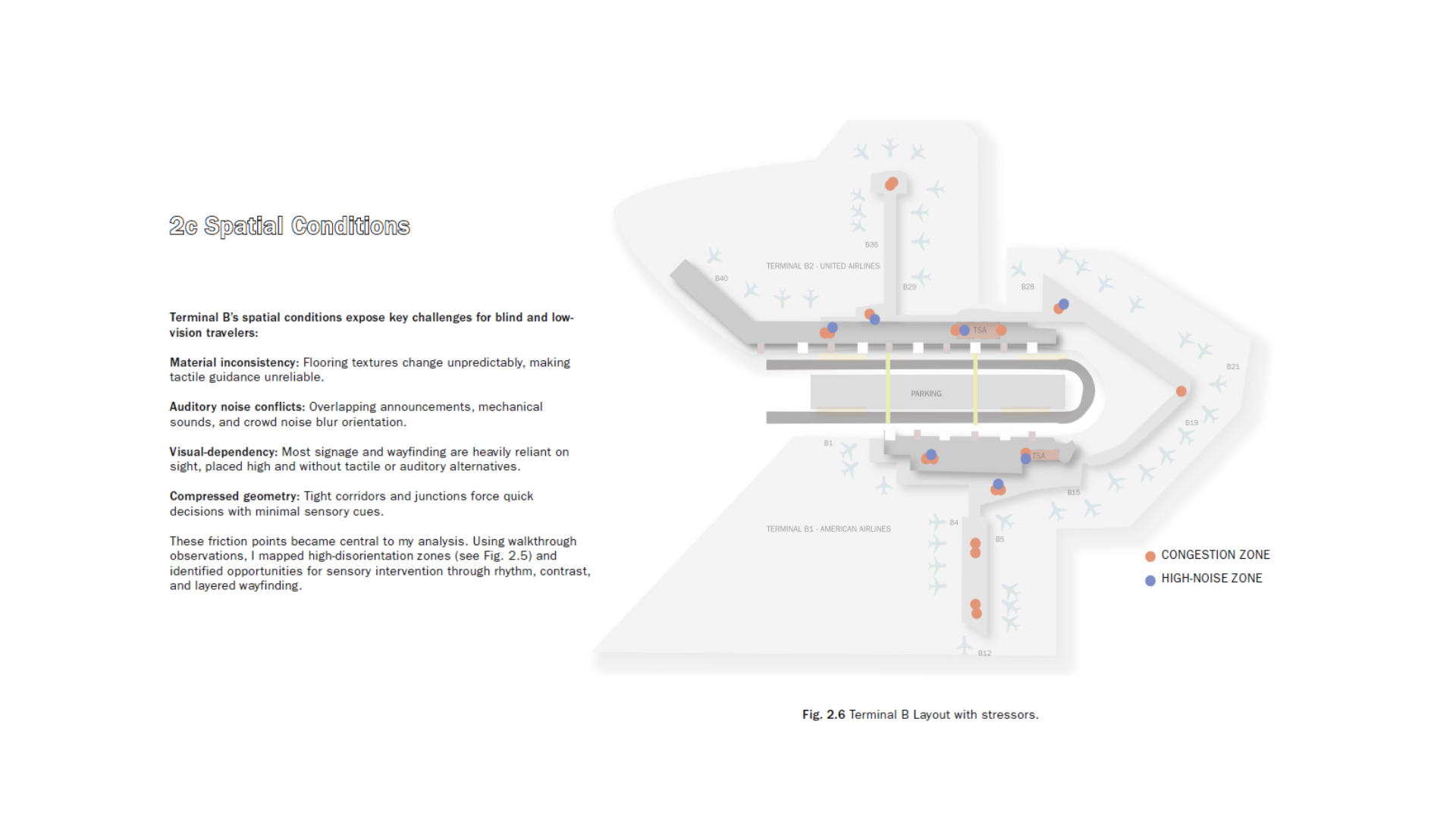
Spatial Conditions — Terminal B layout with congestion and high-noise stressors
03Spatial Conditions — Terminal B layout with congestion and high-noise stressors
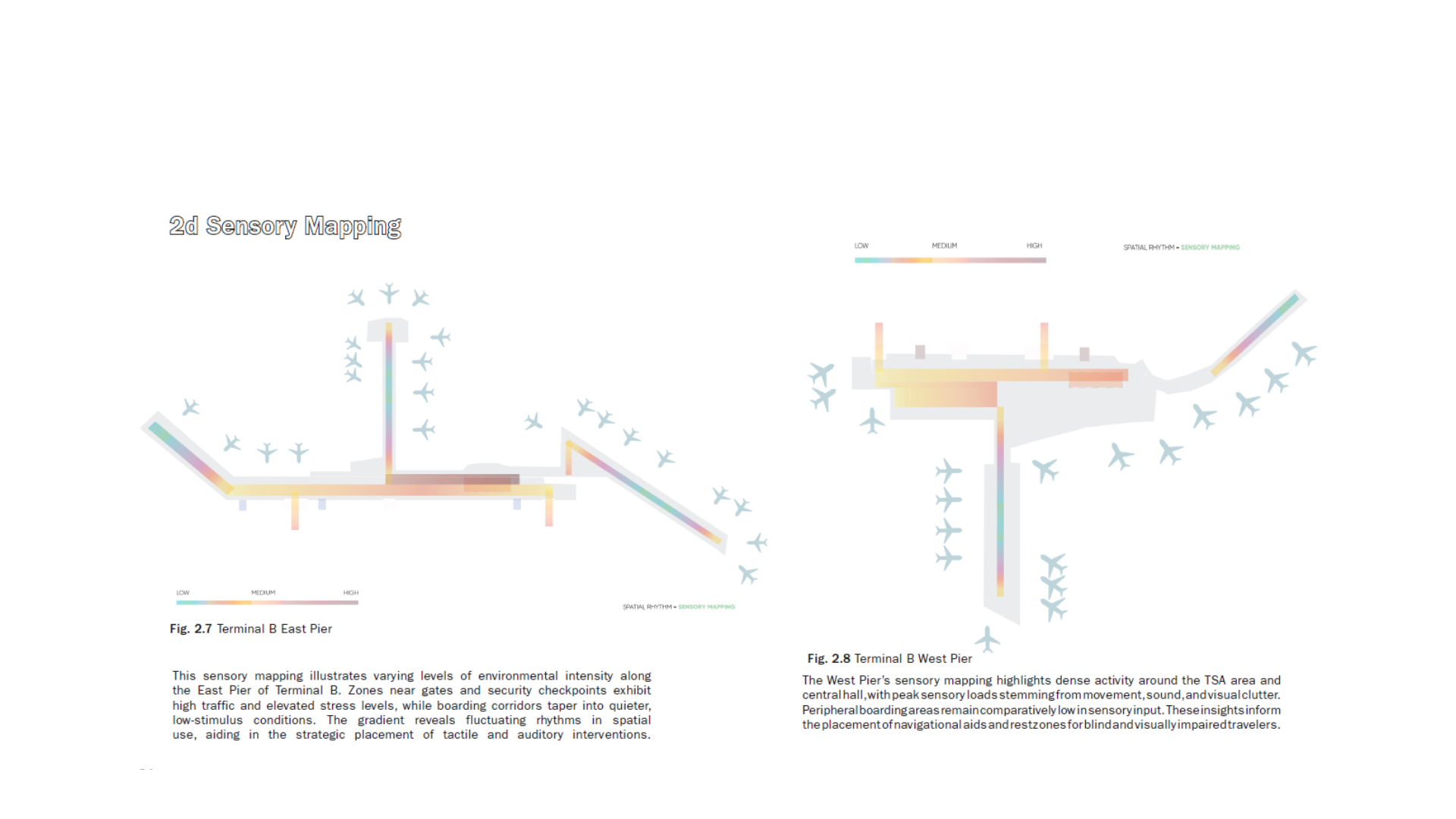
Sensory Mapping — environmental intensity across the East and West Piers
04Sensory Mapping — environmental intensity across the East and West Piers
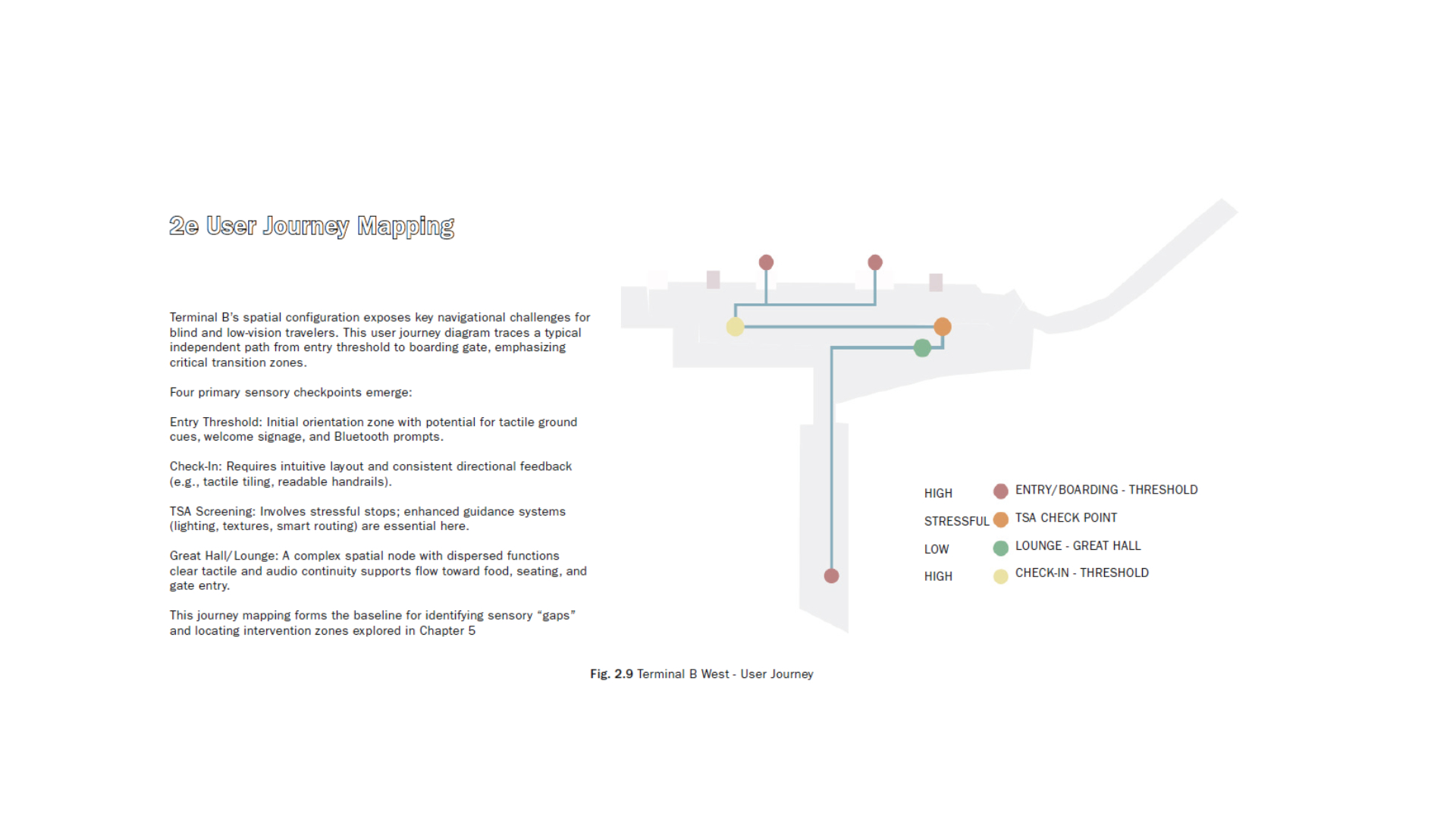
User Journey Mapping — independent path from entry threshold to boarding gate
05User Journey Mapping — independent path from entry threshold to boarding gate
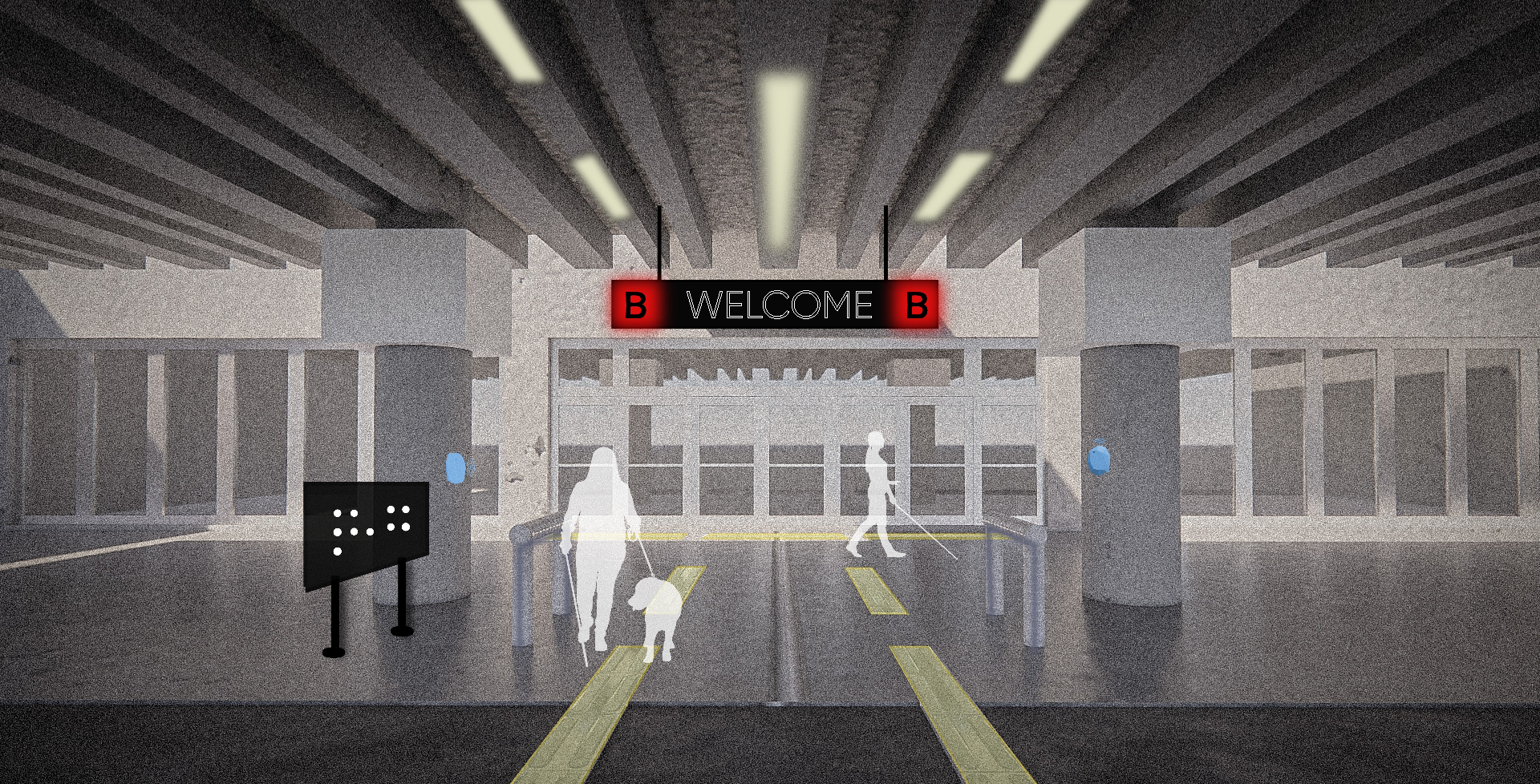
Entry threshold — arrival into Terminal B
06Entry threshold — arrival into Terminal B
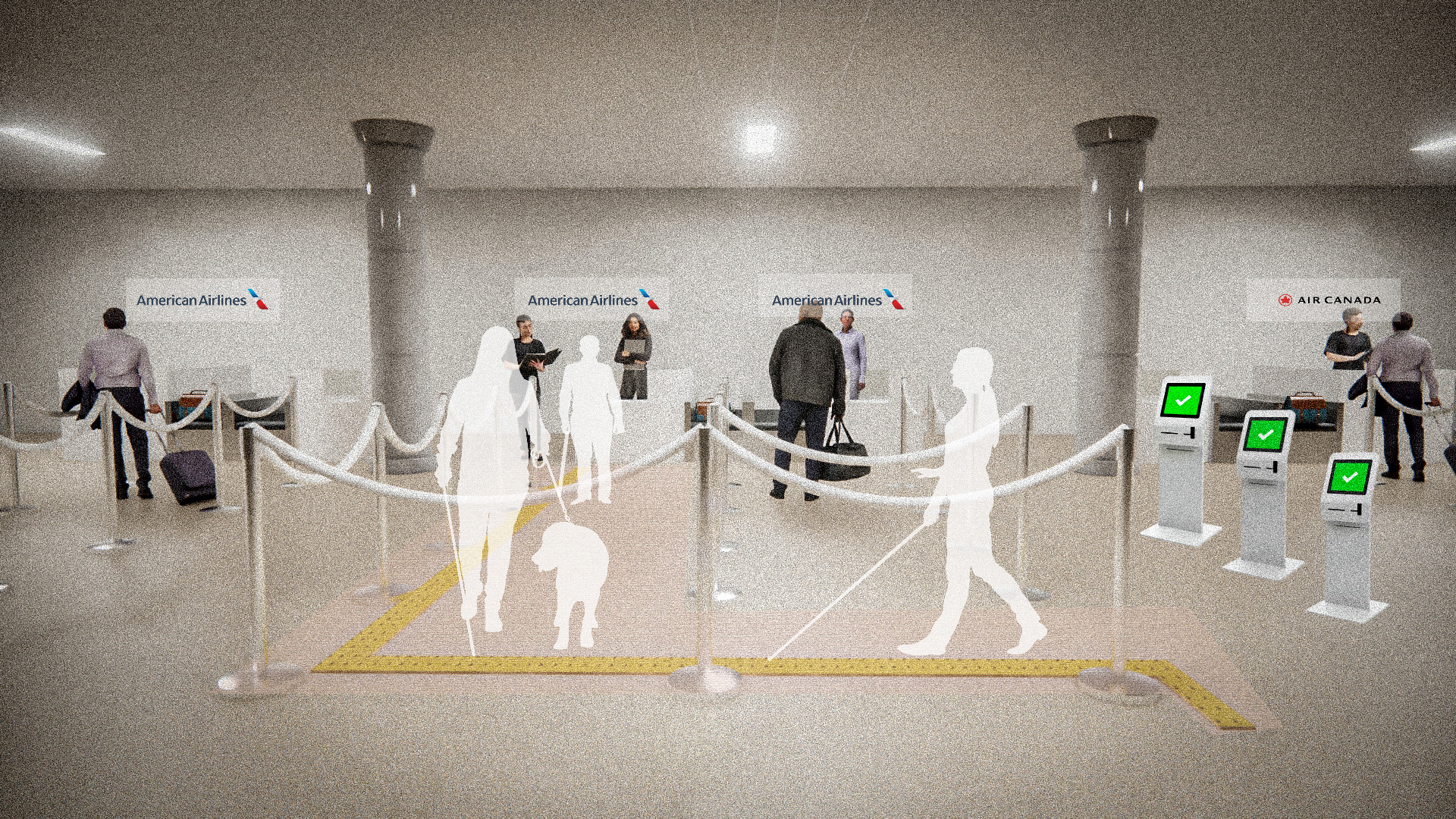
Check-in zone — tactile guidance to the counter
07Check-in zone — tactile guidance to the counter
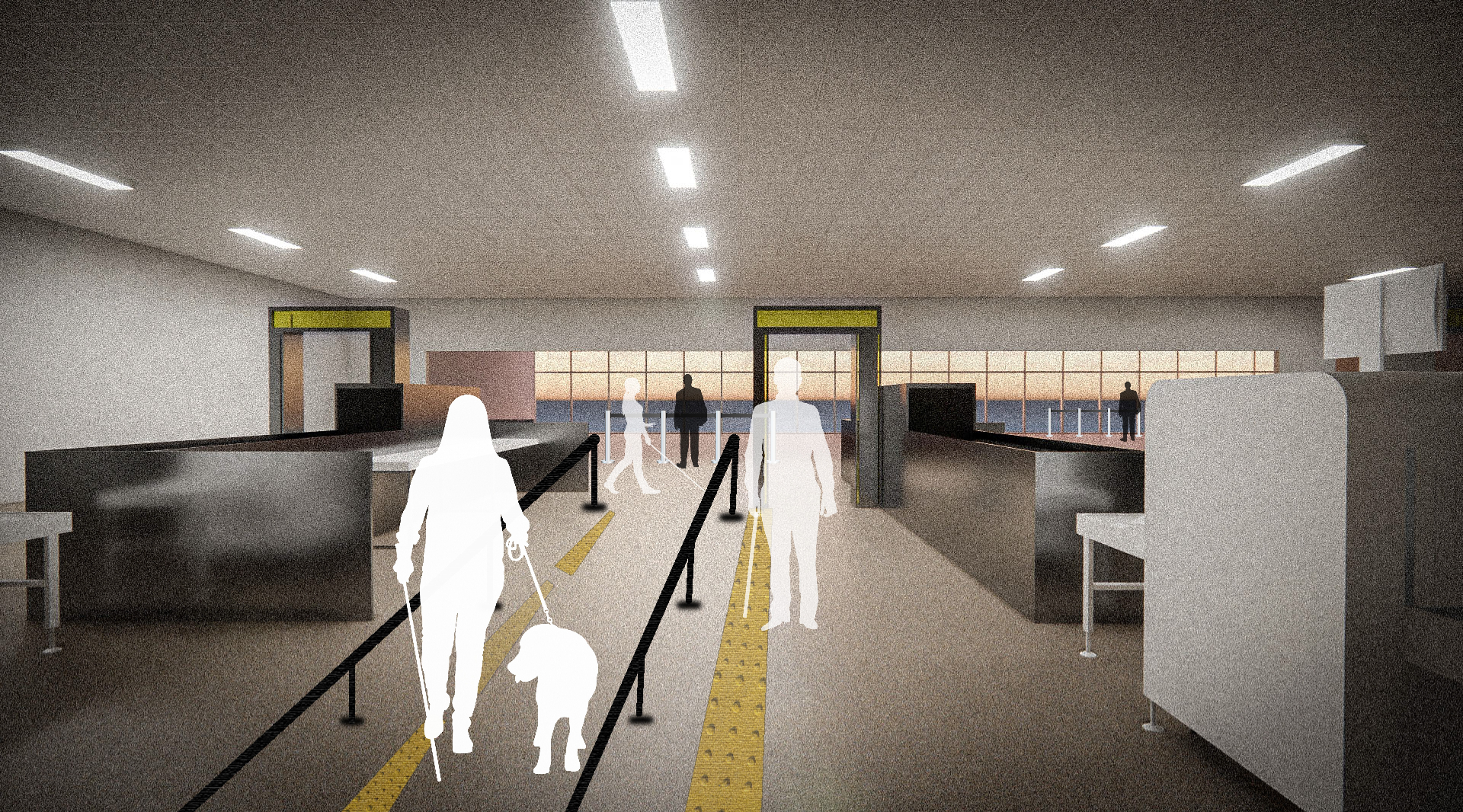
TSA screening — guided path through security
08TSA screening — guided path through security
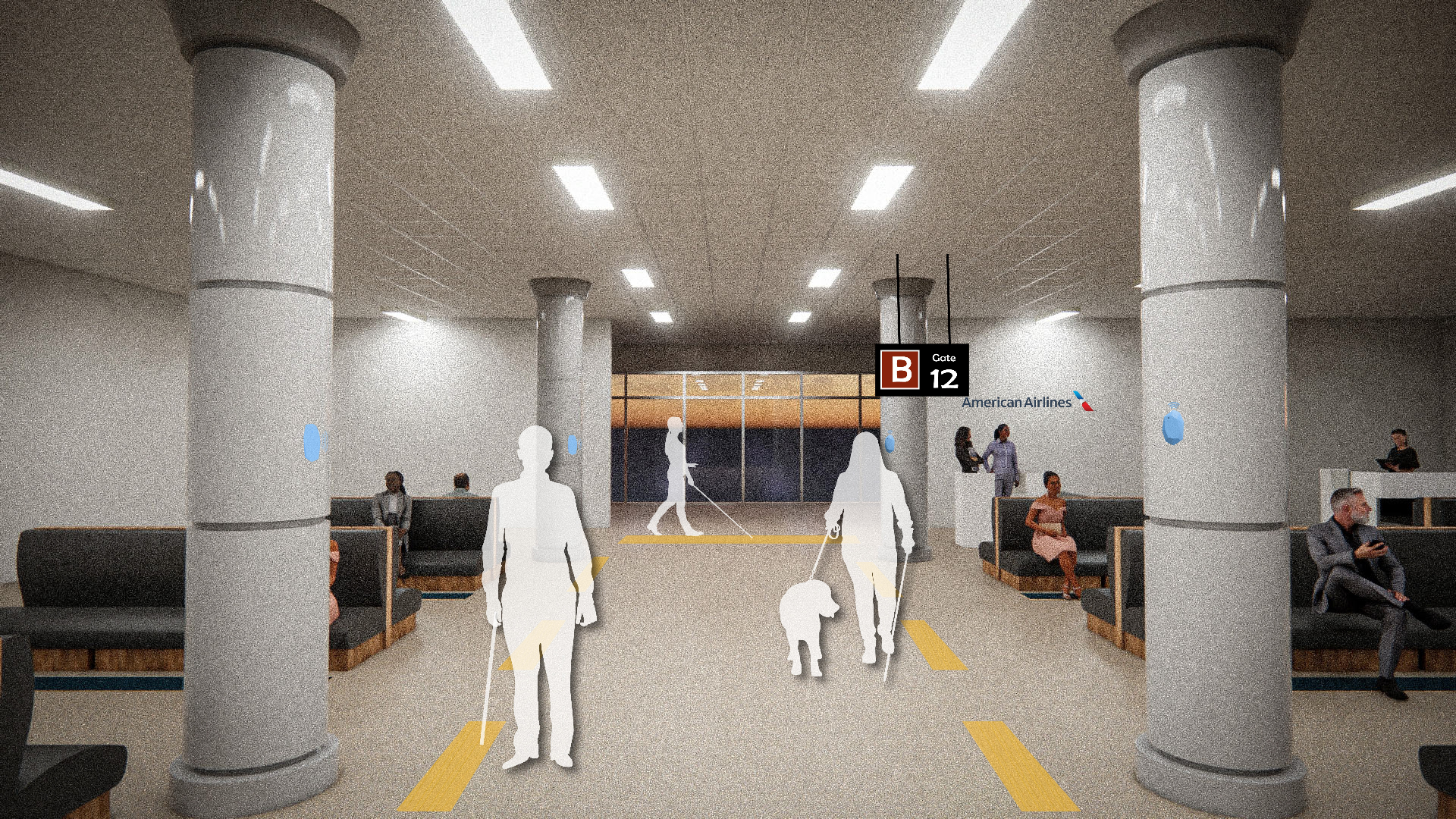
Boarding gate — beacon audio cues to the jet bridge
09Boarding gate — beacon audio cues to the jet bridge
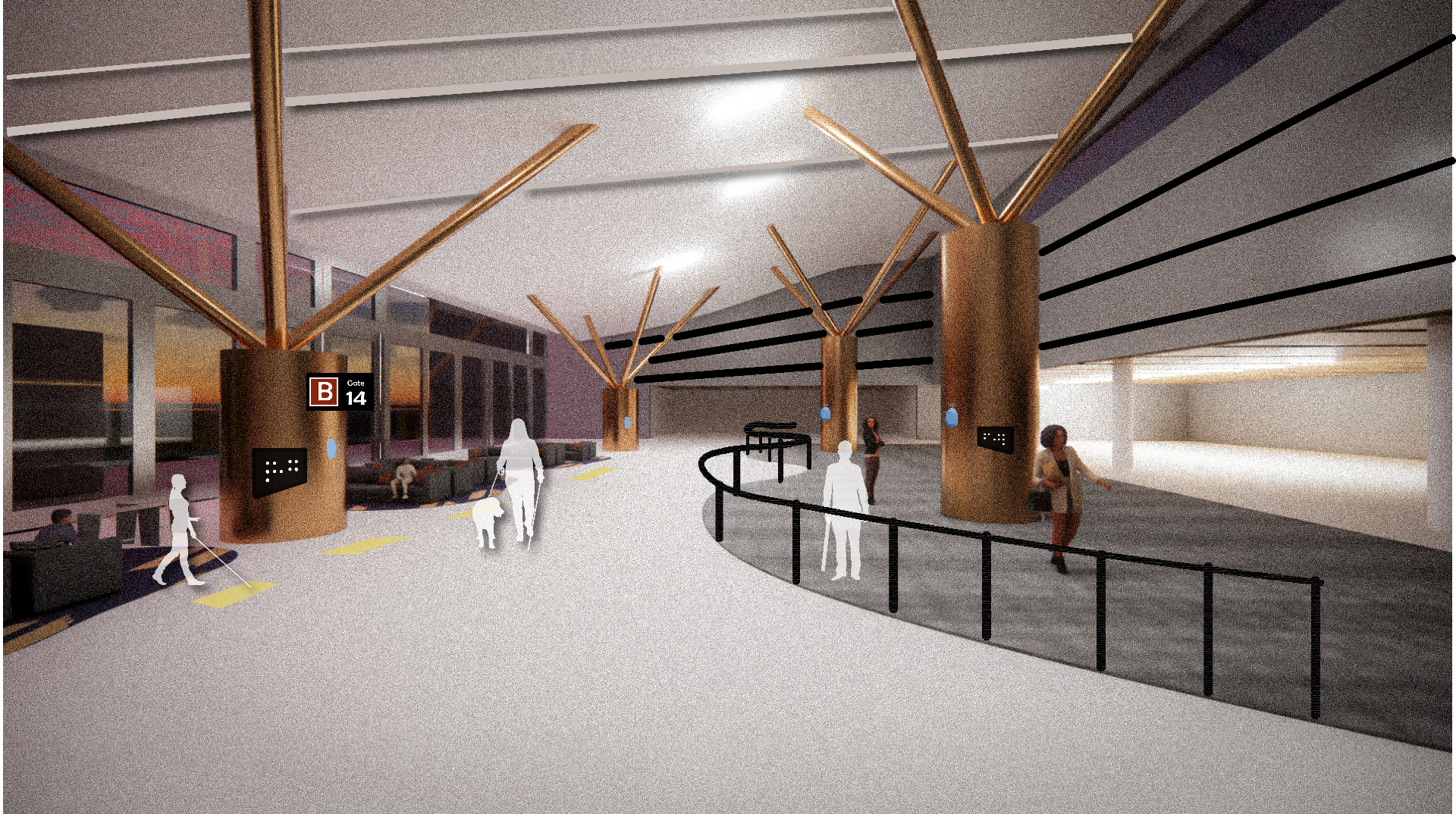
Departure lounge — acoustic and tactile differentiation
10Departure lounge — acoustic and tactile differentiation

Thesis Document

Full research documentation including site analysis, sensory mapping, and design interventions.

Read the Thesis